Department of Physics · University of Genova

Statistical field theory,
hydrodynamics and holography

The STELLAR Lab at the University of Genova explores collective behaviour in many-body systems using tools from statistical field theory, hydrodynamics and holography, bridging analytic, numerical and computational approaches across physics.

Research programmes

Selected active projects

View all projects →
Illustration for Analytic structure and the limits of hydrodynamics
Active

Analytic structure and the limits of hydrodynamics

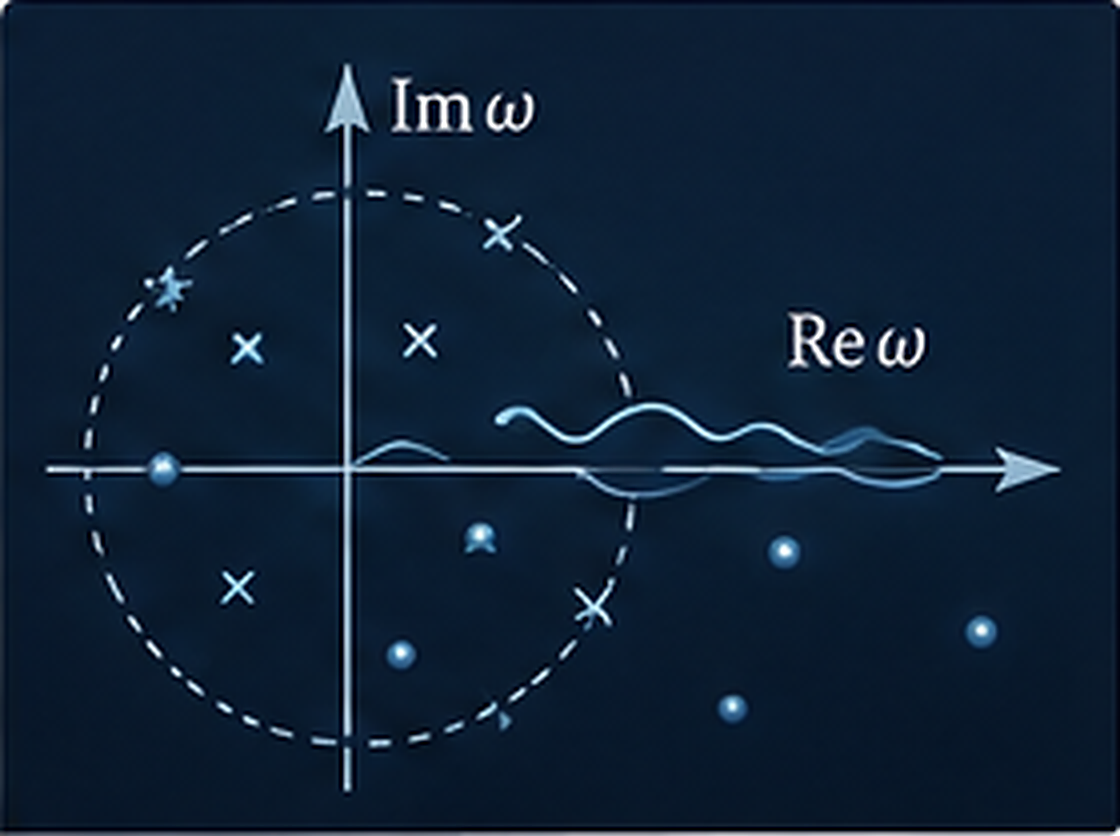
We study where hydrodynamic expansions stop being analytic and what that breakdown reveals about microscopic dynamics. The programme compares static screening scales with dynamical pole collisions, follows quasinormal modes through complex momentum, and studies how isolated poles reorganise into branch cuts.

Project page →
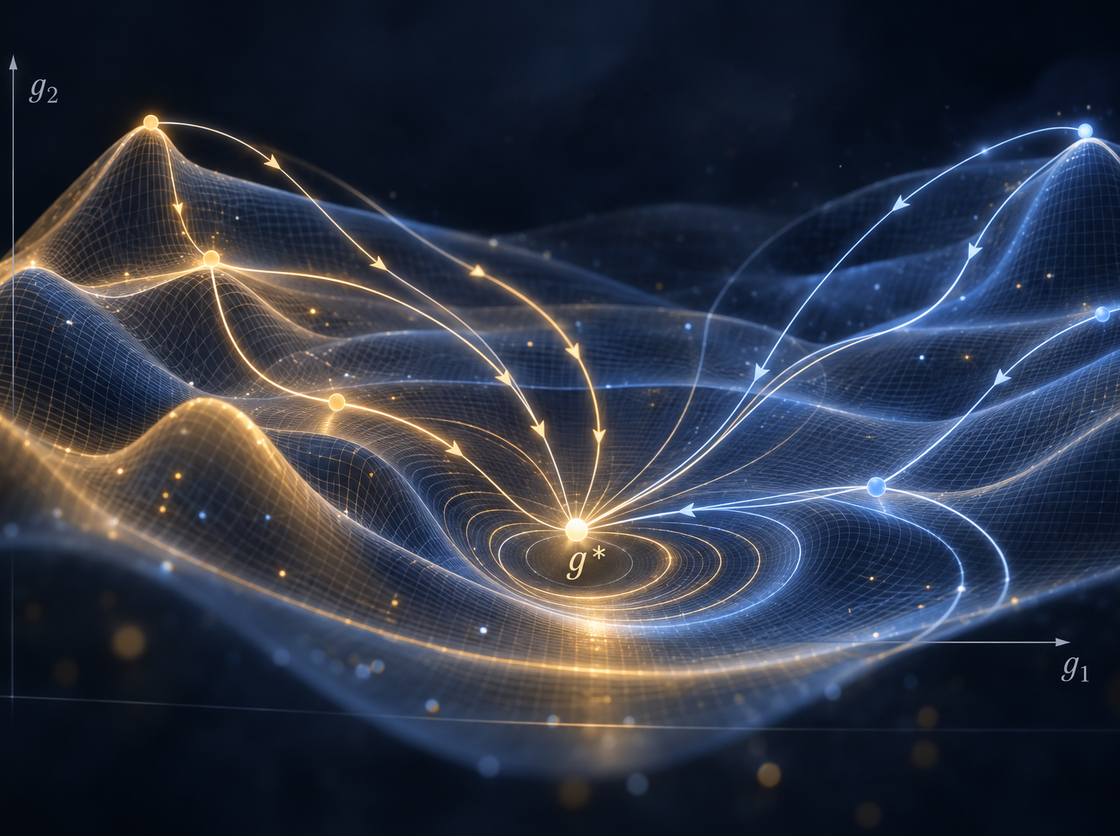

Illustration for Critical phenomena and quantum field theory
Active

Critical phenomena and quantum field theory

We study universal behaviour near phase transitions using conformal field theory, conformal perturbation theory, renormalisation-group methods, dualities and Monte Carlo calculations. Topological quantum field theory provides a complementary language for phases beyond ordinary symmetry breaking.

Project page →
Illustration for Exotic dynamics and search
Active

Exotic dynamics and search

We study particles whose velocity need not be proportional to momentum and ask what can be gained by treating the dispersion relation itself as a design variable. The programme runs from boost-agnostic Hamiltonian and kinetic theory to hard-particle simulations, first-passage search in mazes and dispersion-engineered optimisation algorithms.

Project page →
Illustration for Fluctuations, memory and non-equilibrium dynamics
Active

Fluctuations, memory and non-equilibrium dynamics

We develop effective theories of fluctuations, memory and rare events in systems driven away from equilibrium. Schwinger-Keldysh methods let us connect dissipation to noise, test whether non-Gaussian stochastic sectors correspond to genuine positive probabilities, and keep track of memory when additional relaxation modes are resolved or integrated out.

Project page →
Illustration for Relaxation and driven steady states in holography and beyond
Active

Relaxation and driven steady states in holography and beyond

We study driven systems that settle into non-equilibrium steady states because forcing is balanced by relaxation. Gauge-gravity duality supplies controlled strongly coupled examples, while quasihydrodynamics organises approximately conserved quantities and other long-lived degrees of freedom.

Project page →